
Designing with Emerging Technologies
ENGS 15.16 · Dartmouth · 2026
Role · Co-instructor
This course teaches students to make things with AI: images, video, sound, 3D objects, and software. The harder skill is deciding, at each step of a project, whether to use AI or to do it yourself, and being able to explain that decision and change it when the evidence changes.
Students keep a record as they work. For every use of an AI tool in a project they note what they asked for, what they expected, what happened, and whether they kept it. One short reading a week, some of them more than a century old, gives them a distinction to explain their own record with.
There are two team projects. The first is a time capsule for 2056: a physical gift, built with AI image and 3D tools and finished by hand, for a future in which some human skill or experience has become rare. The gifts were shown at Dartmouth’s AI@70 celebration, whose theme was “What must remain human?” The second is a product designed to bring people together.
Below is Forme, one team’s gift: a tool for shaping form by hand, made for a designer in 2056 who has never made anything with her hands. Its line is “Think with your hands.”


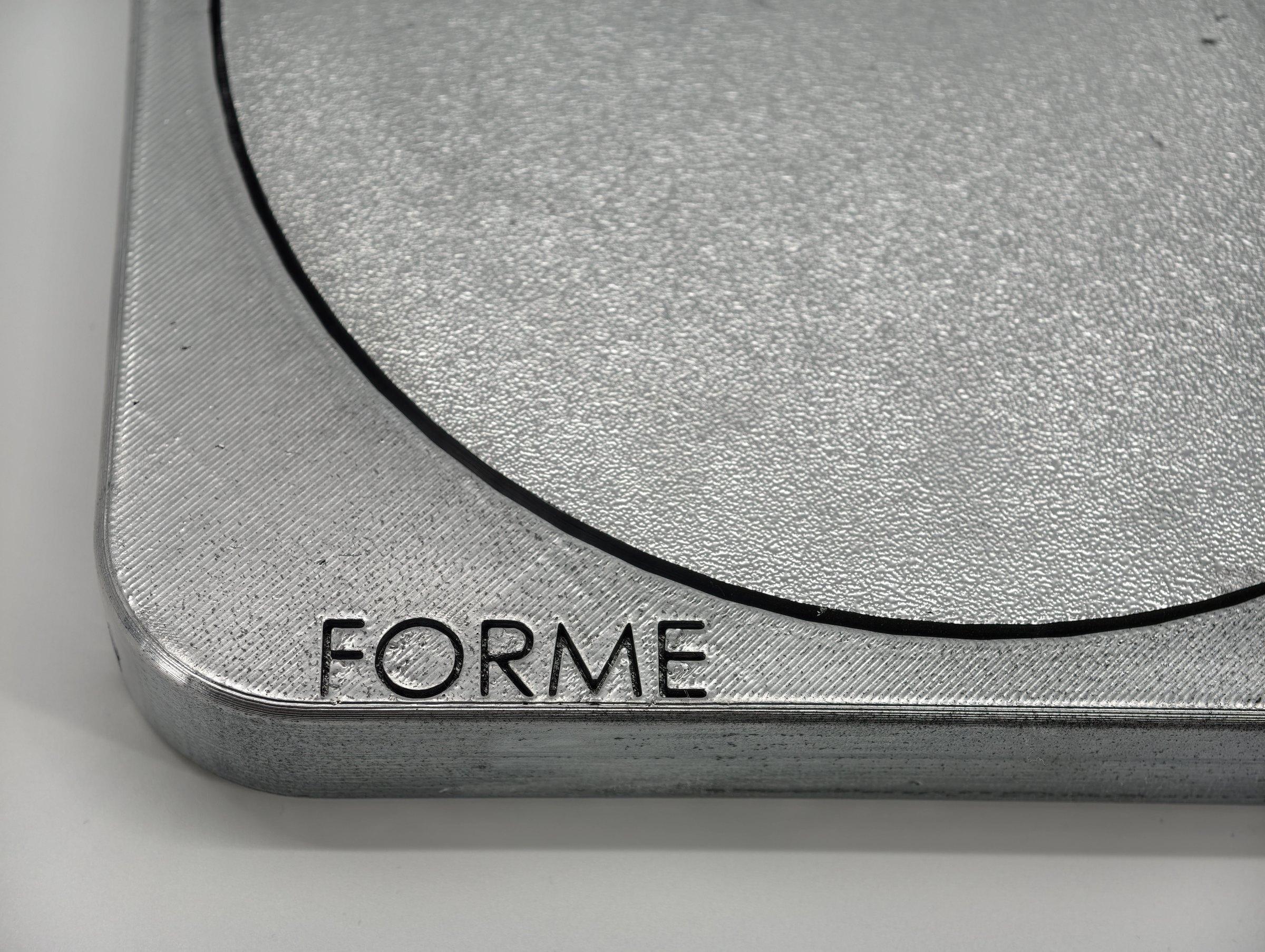
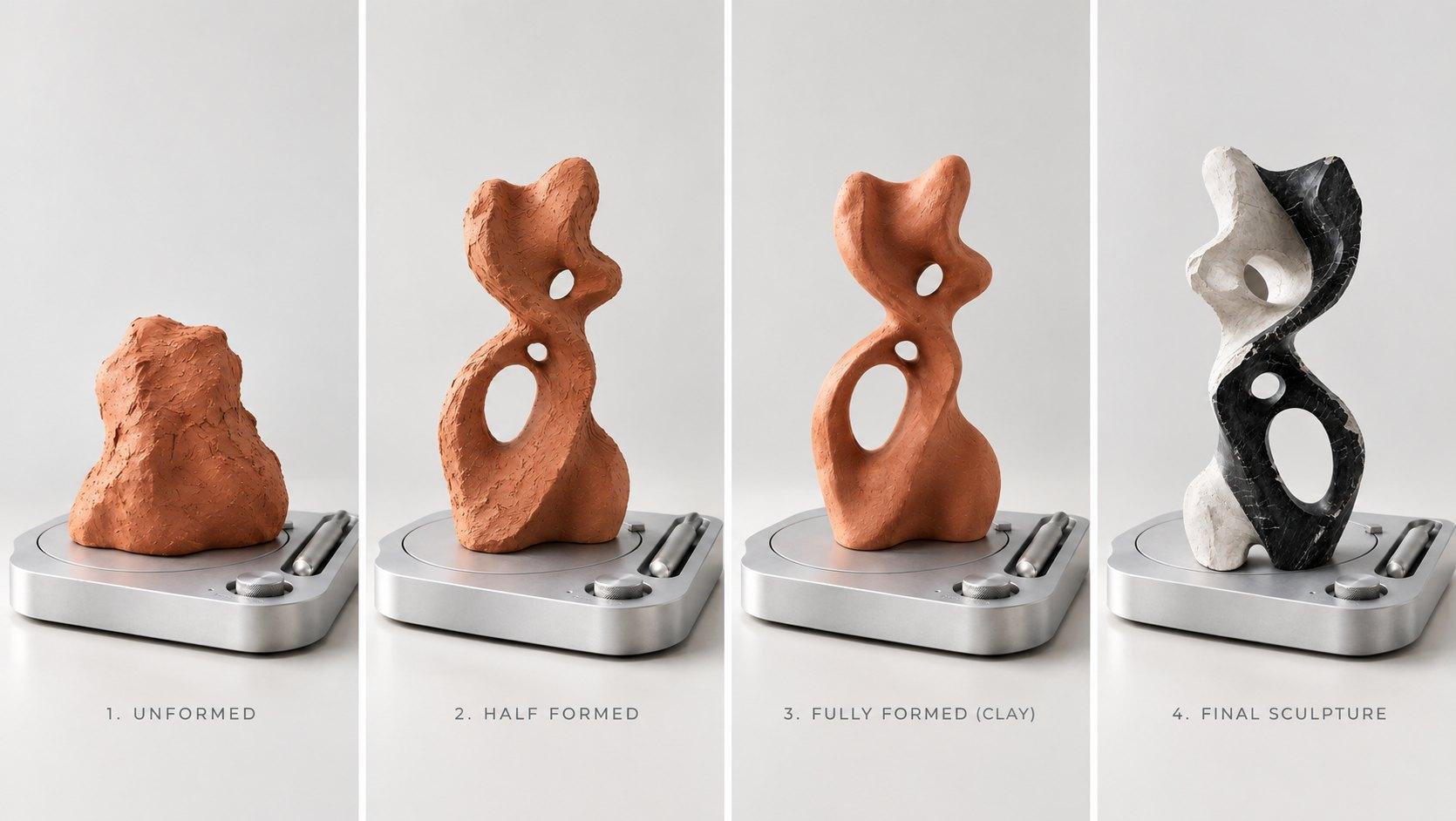

Forme by a student team in ENGS 15.16, Fall 2026. Exhibit photograph by Sophia Scull ’25. Object photographs by Nick Tamas.